
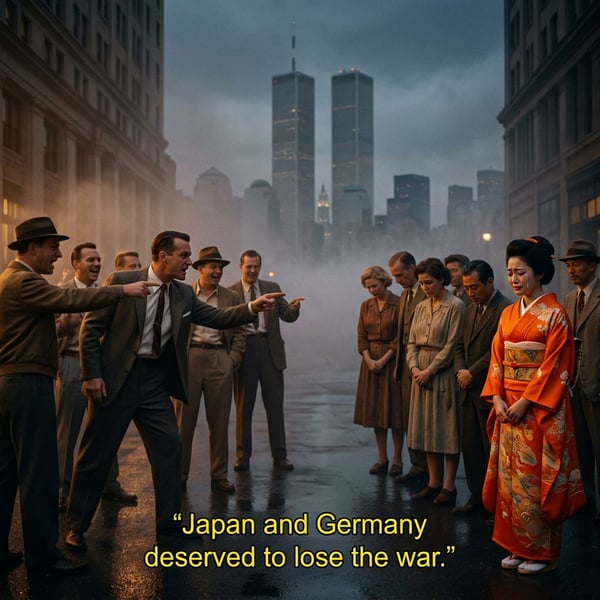
The Orange Kimono Beneath the Twin Towers
أين رُئي هذا الحلم
الأماكن تقريبية: يظهر كل حلم على بُعد نحو 10 كم من مكان مشاركته، ولا يظهر أبدًا في عنوان دقيق. شاهده على خريطة الأحلام
رموز الحلم
I had a dream where Americans were pointing and laughing at Germans and Japanese People, and one of the Americans said "Japan and Germany deserved to lose the War." And a beautiful Japanese woman wearing an orange kimono was crying. And in the background you could see the Twin Towers.
This dream brings together war, national identity, humiliation, grief, and memory. It may be less about making a historical judgment and more about how you are processing the way people inherit the consequences of history.
The Americans pointing and laughing could represent power used without compassion—or a fear that people who have suffered are being reduced to a joke. The line “Japan and Germany deserved to lose the War” is blunt and morally certain. In the dream, it may stand for the impulse to divide the past into winners and losers, deserving and undeserving, rather than acknowledging the complexity and human cost of war. It could also reflect tension between accountability for a nation’s actions and empathy for ordinary people who lived through them.
The Japanese woman may be the dream’s emotional center. Her beauty and orange kimono make her vivid and dignified, while her tears show the personal suffering hidden beneath broad historical labels. She might represent Japan, but she could also symbolize an individual caught inside a collective story—someone whose grief is overlooked while others argue about what a nation deserved. The orange kimono may suggest warmth, vitality, or a striking presence set against a painful scene; its specific meaning depends on what orange and Japanese clothing mean to you personally.
The Twin Towers add another layer of historical trauma. Their presence may connect the scene not only to the Second World War but also to more recent violence, loss, and the way national memories shape one another. They might signal that the dream is linking different eras of conflict—or reminding you that history does not remain safely in the past. The towers could also serve as a visual marker of vulnerability: a symbol of something powerful that can nevertheless be damaged or lost.
Taken together, the dream may be asking: How can people remember wrongdoing and responsibility without turning suffering into ridicule? It may reflect discomfort with triumphalism, with inherited national blame, or with the ease of speaking about whole populations as if they were a single person. It doesn’t necessarily mean you agree with the statement in the dream; dreams often stage harsh voices in order to expose how they feel.
If the dream stayed with you, consider what you felt most strongly—anger at the Americans, sadness for the woman, unease about the Twin Towers, or something else. That feeling may be the clearest clue to what the dream is working through in your own life.
بماذا حلمت؟
تفسير الأحلام