
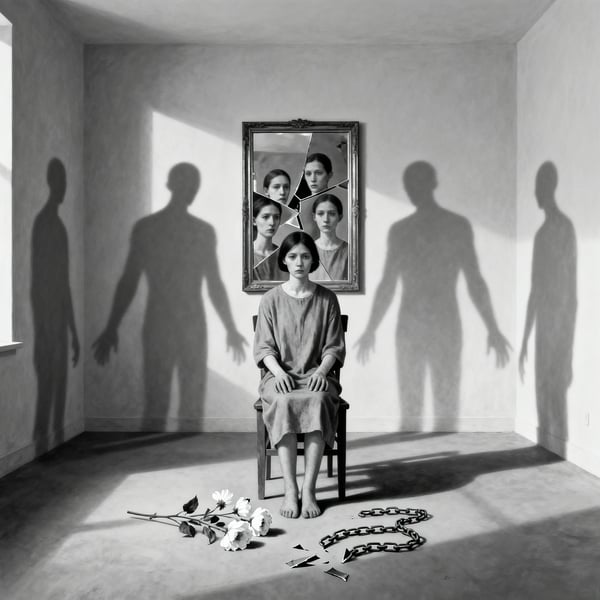
The Unexamined Path to Tyranny and Violence
Símbolos del sueño
Hannah Arendt argues that evil does not necessarily stem from perversity, but from an inability to think and reflect on oneself. In *The Banality of Evil*, the agent of evil is not a demonic monster, but rather someone who has neglected their own inner life. Violence emerges less from a malevolent plan than from an unexamined inner void. Michel Foucault Here the focus is on power and the body. For him, whoever does not govern themselves governs others by force. Tyranny arises when there are no practices of self-care (souci de soi). Lack of self-control → excess of external control. Nietzsche Raw, direct, without anesthesia. The tyrant is someone weak inside, resentful, who transforms his inability to deal with himself into domination. Violence is compensation. It is not noble evil—it is poorly managed decadence. Erich Fromm In *Fear of Freedom*, he is explicit: authoritarian leaders are people who cannot bear their own fragility and project it as cruelty. Lack of internal integration → desire to crush the other. Me Everytime i read stuff like that i see my first analyst looking angry and rude at me
It seems that you are reflecting on your experiences with your first analyst through the lens of these philosophical ideas about power, evil, and self-governance. Let's interpret this dream-like narrative:
Dream Elements and Interpretation:
-
Hannah Arendt's Banality of Evil:
- Interpretation: This might suggest a perception or a memory of your analyst as someone who, perhaps unconsciously, enacted certain behaviors not out of malice but from a place of unexamined behavior or thoughtlessness. There may be feelings that they failed to reflect or engage deeply with their own inner life, which affected their interactions with you.
-
Michel Foucault's Focus on Power:
- Interpretation: Your memory or dream might be associating your analyst's demeanor with an external exertion of power, perhaps reflecting an observed lack of self-care or internal governance. This might have manifested in your sessions as a form of authority over you, reflecting Foucault’s idea that those not governing themselves govern others by force.
-
Nietzsche's View of the Tyrant:
- Interpretation: Nietzsche’s interpretation might resonate with how you perceived your analyst's behavior as stemming from internal weakness. The dream narrative implies you view their anger or rudeness as a mask for internal struggles or unresolved issues—domination emerging from inner fragility.
-
Erich Fromm's Fear of Freedom:
- Interpretation: Fromm's concepts map onto a perceived authoritarian dynamic in your interactions, where your analyst's approach could be seen as projecting their inner conflicts outward. This suggests a narrative where their cruelty or hard demeanor is a projection, possibly because they are unable to integrate their own vulnerabilities.
-
Your Reflection on the Analyst:
- Interpretation: The central figure in your narrative, the analyst, represents an emotional imprint—anger and rudeness tied to authority and unresolved inner conflict. This could symbolize an unresolved personal experience with them and might illuminate why certain philosophical discussions trigger memories of the analyst.
Overall Dream Meaning:
Your reflections on philosophical ideas related to power, evil, and internal dynamics seem to be a way of processing and making sense of your past experiences with your first analyst. These associations might reveal deeper considerations about authority figures in your life and how you've navigated their complexities.
The dreamscape constructed by these thoughts is rich with introspection, hinting that these unresolved feelings towards your analyst could potentially influence your perception of authority, self-governance, and your personal journey toward self-understanding. It seems important to acknowledge these emotions, as they might provide insight into your own self-care practices and boundaries when dealing with authority.
¿Qué soñaste?
Interpretar sueño