
Two Courtrooms and the Question of Justice
Onde foi sonhado
Os locais são aproximados: cada sonho aparece a cerca de 10 km de onde foi compartilhado, nunca em um endereço exato. Ver no mapa dos sonhos
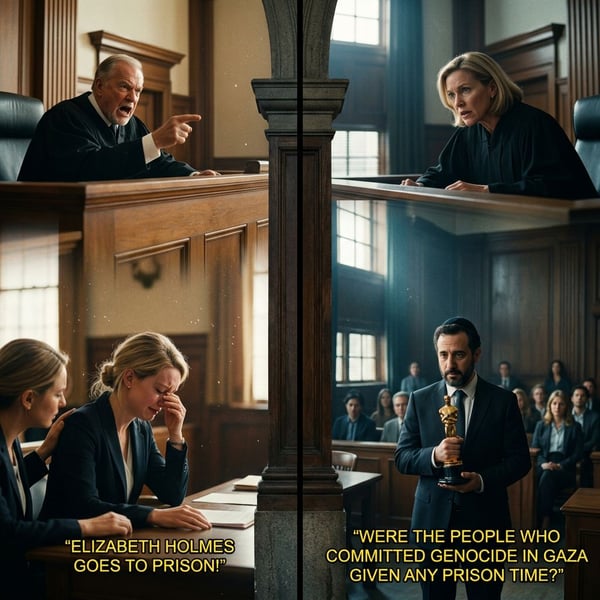
I had a dream there were two parallel courtrooms side by side. In the first courtroom, a male judge was screaming "Elizabeth Holmes goes to Prison" and the judge had an angry expression on his face. A blond woman was crying in the court. And in the second parallel courtroom, then a female blonde Judge said "Were the people who committed genocide in gaza given any prison time?" A Jewish Man was holding an academy award.
This dream seems to stage a conflict about justice, punishment, and who gets to define accountability. Rather than predicting anything or making a judgment about real people, it may be expressing your own questions about how justice is applied—and how public stories shape our sense of right and wrong.
The two parallel courtrooms
The courtrooms sit side by side, suggesting two cases or moral frameworks being compared. They may represent the feeling that different people, actions, or groups are judged by different standards. The word parallel is especially suggestive: the situations may feel connected, but they are not being considered in the same room or under the same rules.
The angry male judge and the crying woman
The judge shouting that Elizabeth Holmes goes to prison could symbolize forceful, decisive punishment. His anger may reflect frustration, outrage, or a desire for a clear verdict. The crying woman could represent the human cost of judgment, vulnerability, or the emotional complexity that gets obscured when a case becomes a public spectacle. Since Holmes is a real public figure, she may also stand for broader themes such as deception, ambition, celebrity, or the consequences of abusing trust.
The female judge’s question
In the second courtroom, the question about whether people who committed genocide in Gaza received prison time shifts the dream from one prominent individual’s conviction to the problem of accountability for mass violence. The judge’s question may express moral unease: why can punishment seem swift and visible in one situation, while accountability for immense harm appears absent, delayed, or uncertain in another? The dream may be asking whether justice is consistent—or whether power and visibility influence whose actions are punished.
The Jewish man holding an Academy Award
This striking image brings identity and recognition into the courtroom. An Academy Award could symbolize public honor, cultural influence, performance, or the power to shape a story. Its presence beside a question about mass violence may suggest concern about how public narratives are created, whose voices are heard, and how identity can become entangled with judgments about collective responsibility. The man’s Jewish identity does not make him responsible for the actions of a government or any other group; in the dream, it may instead indicate that the subject feels emotionally and politically charged, or that you are thinking about the distinction between individual and collective identity.
A possible central meaning
Taken together, the dream may be exploring a tension between punishing a visible individual and holding powerful systems or actors accountable for large-scale harm. It might reflect anger at perceived double standards, uncertainty about what justice should look like, or discomfort with the way public attention turns complex moral questions into scenes of accusation and verdict.
It may help to ask yourself:
- Where in your life do you feel that standards are being applied unevenly?
- Are you struggling with the difference between legal punishment, moral responsibility, and public recognition?
- Did the dream leave you feeling angry, unsettled, or confused—and what current events or personal experiences might have stirred that feeling?
The dream’s emotional center may be less about reaching a final verdict than about insisting that all suffering and wrongdoing be taken seriously, without letting one case erase or excuse another.
O que você sonhou?
Interpretar Sonho