
Reshaping Shadows
Rüya sembolleri
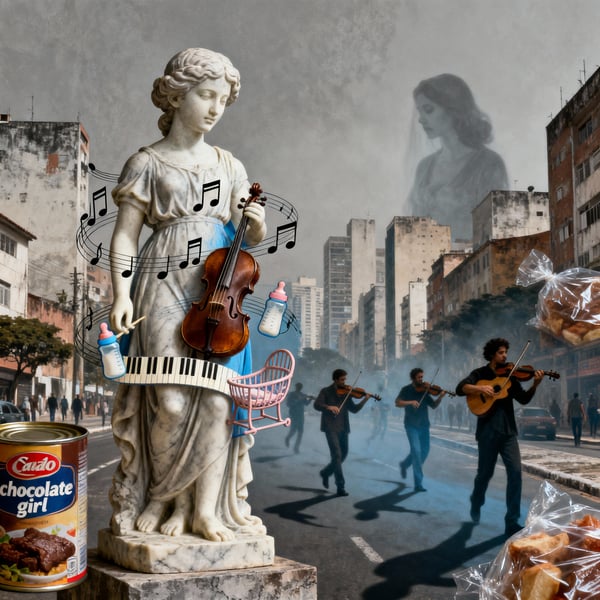
Musicians will reshape the “chocolate girl” into a sanitized, respectable figure—no longer sexualized, no longer disruptive. In doing so, they erase me as a mother, as if her image now carries more value than my lineage. She is required to stop “staining” both music and motherhood, and the consequence is that my line is expected to end. Because she is making too much money out of that while they are not. I am aware of this because my fertile window coincides with the dates when many musicians will be in São Paulo, as if that timing itself were a message: that I should have left earlier, disappeared into a cooking class somewhere else, tried my luck in a safer, quieter form of success. I am not allowed to be famous. I am deemed insufficient across the board, and that contradiction would confuse me as a child—because while my body is not “glass-like” on the outside, inside I age like every other woman, if not faster. I also know—or at least understand it this way—that what I eat contributes to that acceleration: a diet heavy in processed food, repeating my grandmother’s pattern, which I believe led her to early menopause. Whether medically provable or not, the repetition feels structural, inherited, and brutally hard to break. On top of this, I believe my mother will stop paying my bills, and that financial collapse places me at risk of criminalization—not through wrongdoing, but through neglect, debt, and abandonment. The system does not need me to fail loudly; it only needs me to fall behind. Jail as cancer from the sugar drugs and to point the big other doesn’t get any thing cheap from me. People will use my ideas and this will be counted as me having had sex in a literal way, the pain I get when I binge show the abuse.
This dream conveys a deep sense of anxiety and fear about transformation, identity, legacy, and societal pressures. Let's break down the elements for interpretation:
-
"Chocolate Girl" Transformation:
- The "chocolate girl" represents your identity, perhaps encompassing race, femininity, and cultural expression. The desire of musicians to reshape her into a "sanitized, respectable figure" suggests external pressure to conform to societal norms, which may involve erasing authentic aspects of your identity.
- This implies a struggle between maintaining individuality and succumbing to societal expectations. It reflects fears of losing authenticity and being overshadowed or stifled by "respectable" images that fail to capture your true self.
-
Motherhood and Lineage:
- The dream reflects a blurring of lines between personal value and external expectations, where your role as a mother and the importance of your lineage becomes secondary to an external image.
- This indicates a fear of being undervalued for your contributions to family and culture, overshadowed by superficial success measures that society imposes.
-
Fertile Window and Musicians in São Paulo:
- The overlap of fertility with public events suggests a personal, biological timeline that contradicts external demands. It underlines the societal pressure to choose between personal life and professional presence.
- Your inner voice suggests a conflict between pursuing dreams (potentially through fame) and traditional or stable success, evidenced by the urge to "disappear into a cooking class."
-
Self-Worth and Aging:
- The metaphor of not having a "glass-like" body on the outside, but aging on the inside hints at vulnerability—feeling unseen or unvalued despite personal insights or experiences.
- It might express fears of inadequacy and aging, compounded by societal beauty standards and expectations.
-
Diet and Inherited Patterns:
- This touches on concerns about health and longevity, influenced by familial habits. The "passed down" nature of poor diet signifies ingrained cycles that are hard to break, reflecting broader themes of legacy and personal responsibility.
-
Financial and Social Precarity:
- Worries about financial support being withdrawn pinpoints fears of instability, neglect, and entrapment in a system designed to marginalize you quietly rather than through scandal.
- The idea of jail as cancer from "sugar drugs" nods to gradual harm (poor choices or systemic issues) leading to downfall, not overt mistakes.
-
Intellectual Property and Sexuality:
- The belief that others will use your ideas and that this exploitation resembles sexual objectification highlights fears of intellectual or creative theft, where personal contributions are trivialized or misused without credit.
This dream reveals a profound struggle with identity and external pressures, balancing between personal, cultural, and societal expectations. It suggests a need for validation of authenticity, recognition of true talents, and breaking free from inherited cycles and roles that don't resonate with your core self. The dream invites reflection on self-worth, individual choices, and pathways for growth that honor the complexities and values innate to you.
Rüyanda ne gördün?
Rüya Yorumu